

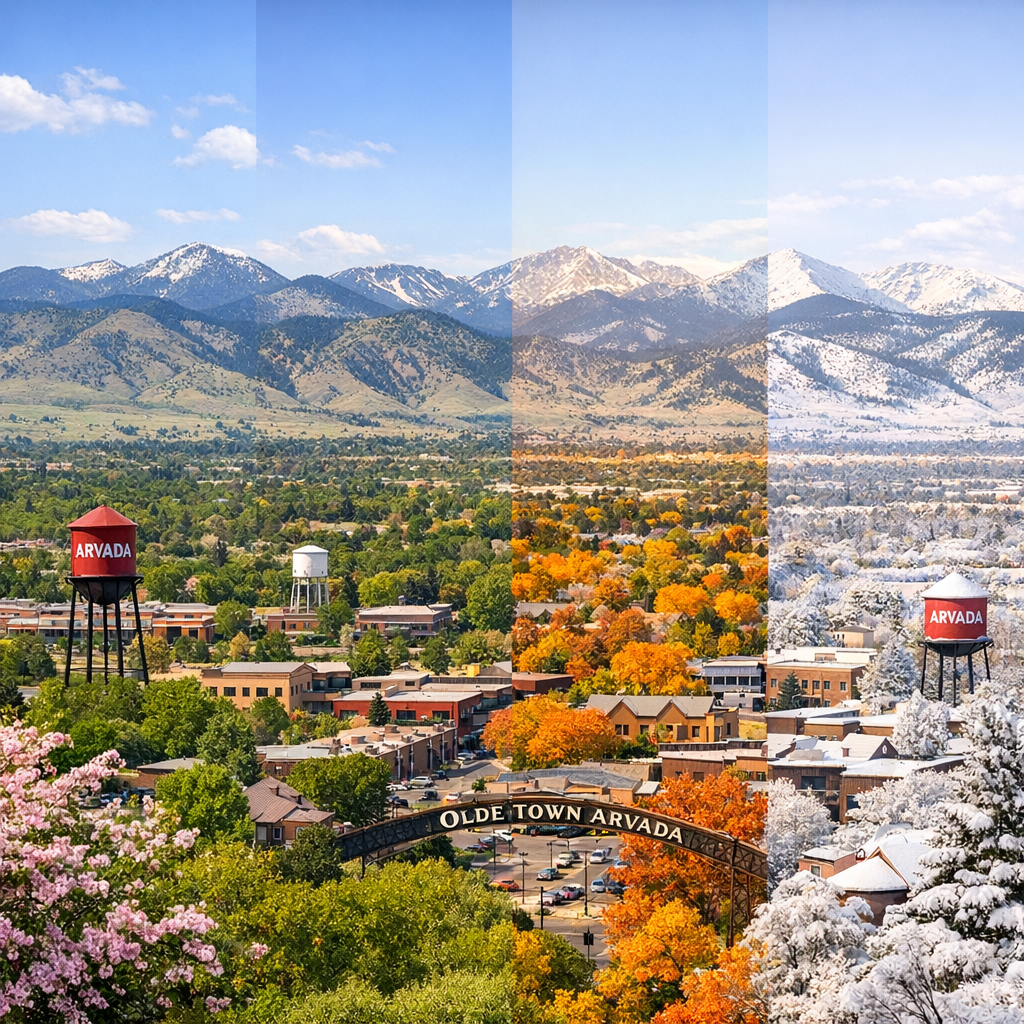
Arvada, Colorado, experiences a semi-arid climate characterized by distinct seasonal variations, influenced by its elevation and proximity to the Rocky Mountains.
Temperature Patterns
Throughout the year, temperatures in Arvada fluctuate significantly. Summers are warm, with average highs around 87°F (31°C) in July, while winters are cold, with average highs near 45°F (7°C) in December. The annual temperature range typically spans from lows of 24°F (-4°C) to highs of 88°F (31°C).
Precipitation and Snowfall
Arvada receives an average annual precipitation of approximately 17 inches (432 mm), with May being the wettest month, averaging 2.6 inches (66 mm) of rainfall. Snowfall is common from October through May, averaging around 61 inches (155 cm) annually.
Seasonal Changes
Each season in Arvada brings unique weather patterns:
- Spring (March-May): Gradual warming with variable weather, including occasional late-season snowstorms and increasing rainfall.
- Summer (June-August): Warm temperatures with frequent afternoon thunderstorms, contributing to the majority of annual precipitation.
- Fall (September-November): Cooling temperatures and decreasing precipitation, with the first frosts typically occurring in October.
- Winter (December-February): Cold temperatures with regular snowfall, contributing to the annual snow accumulation.
Environmental Factors
Arvada’s climate is influenced by its elevation of approximately 5,300 feet (1,615 meters) above sea level, leading to cooler temperatures and increased snowfall compared to lower elevations. Additionally, its location east of the Rocky Mountains places it in a rain shadow, resulting in drier conditions.
Understanding these climate patterns helps residents and visitors prepare for the diverse weather conditions experienced throughout the year in Arvada.