

By William Nguyen
Arvada’s skies are getting warmer, our air more burdened, and weather events increasingly surprising—and yet, there’s reason for optimism. The City and County are acting now to protect health and the natural world. Here’s a look at what’s changing, what’s risky, and what residents can do.
What’s Shifting in Arvada’s Weather & Climate
Warming, with More Hot Days
Over recent decades, Arvada has experienced rising average temperatures across all seasons. That means more heat waves, especially in summer, and generally milder winters. These shifts bring risks: heat stress, early snowmelt, and even turf stress in our trees and yards.
Wildfire Risk & Smoke
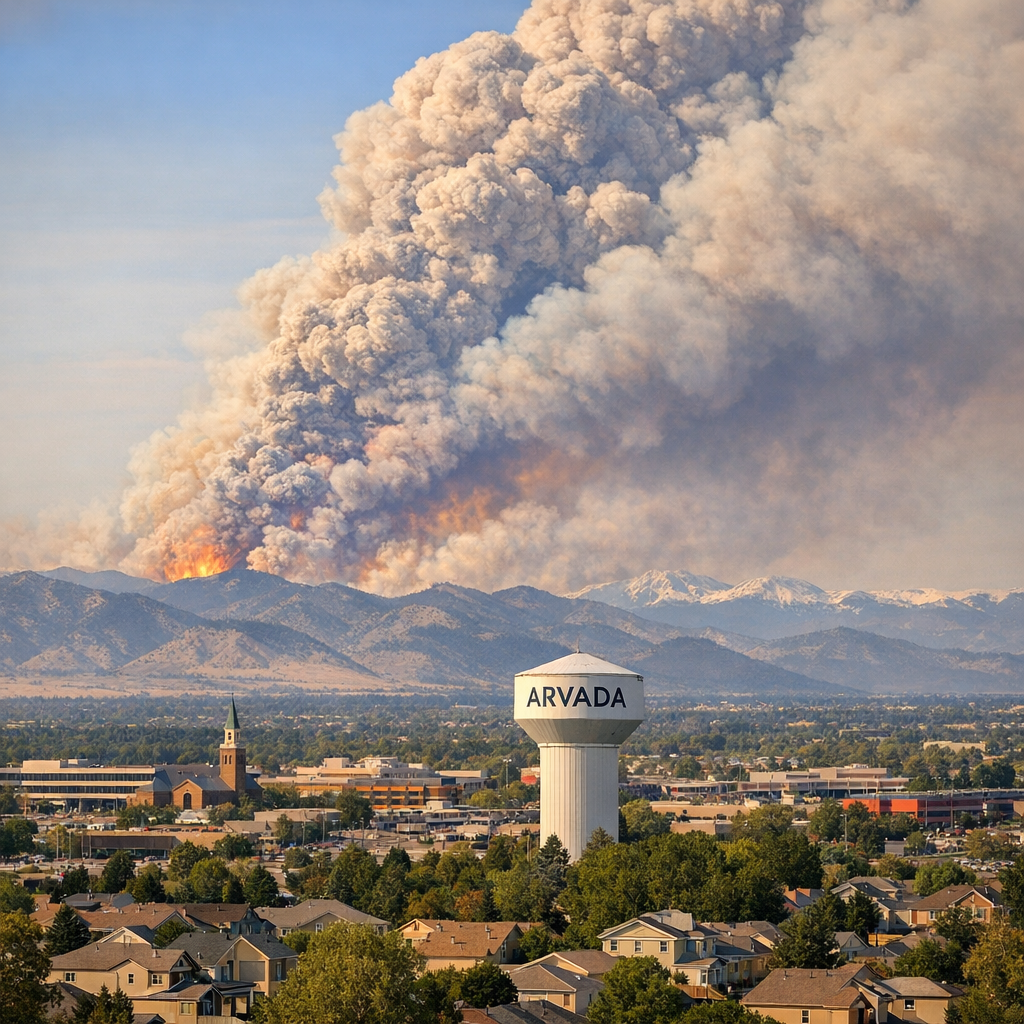
Jefferson County is ranked among the highest in the state for wildfire risk, largely because much of its land lies in Wildland–Urban Interface zones where development meets fire-prone vegetation. Smoke from distant or nearby wildfires reduces air quality and poses health risks, especially for people with asthma or heart conditions.
Storms, Drought, and Water Concerns
Storms have become more intense, increasing the risk of flash flooding, especially where development has reduced natural drainage. At the same time, drought cycles are longer and more severe, stressing water supplies and ecosystems. Groundwater and surface water quality can suffer, particularly after wildfire and during storm runoff events.
Local Efforts for a Safer, More Resilient Arvada
Arvada’s Climate & Sustainability Action Plan
In July 2026, Arvada’s City Council unanimously approved a Climate & Sustainability Action Plan (CASAP). The plan outlines steps to reduce greenhouse gas emissions—40% by 2030 and 75% by 2050 relative to 2015 levels—and seeks operational improvements, green infrastructure, habitat protection, and climate equity as core components.
Jefferson County’s Strategy: Air, Forests, Water
County-wide, air quality controls, wildfire management, and stormwater regulation are central parts of the public health and environmental response. Open burning is restricted during high-risk months; stormwater permits enforce erosion and pollutants control during and after heavy rains; and forest fuel reduction efforts aim to reduce severity of wildfires.
What Residents Can Do
- Test your home for radon—yes, it’s natural, but over 50% of homes in Jefferson County exceed safe levels.
- In wildfire smoke, stay inside with filtered air, limit outside workouts, and track air quality alerts.
- In heat waves, stay hydrated, use cool spaces, and check on neighbors who may be vulnerable.
- Reduce your own carbon footprint—drive less, use energy-efficient appliances, plant native trees or low-water landscaping.
- If you own property in the Wildland–Urban Interface, clear brush, maintain defensible space, and use fire-safe materials.
Looking Ahead
The challenges are real—hotter summers, more volatile weather, wildfire smoke—but so is our response. As Arvada and Jefferson County roll out climate plans, focus on community resilience, health protection, and environmental stewardship remains strong. By staying informed and taking action at home, each of us can help ensure our city stays vibrant for generations to come.